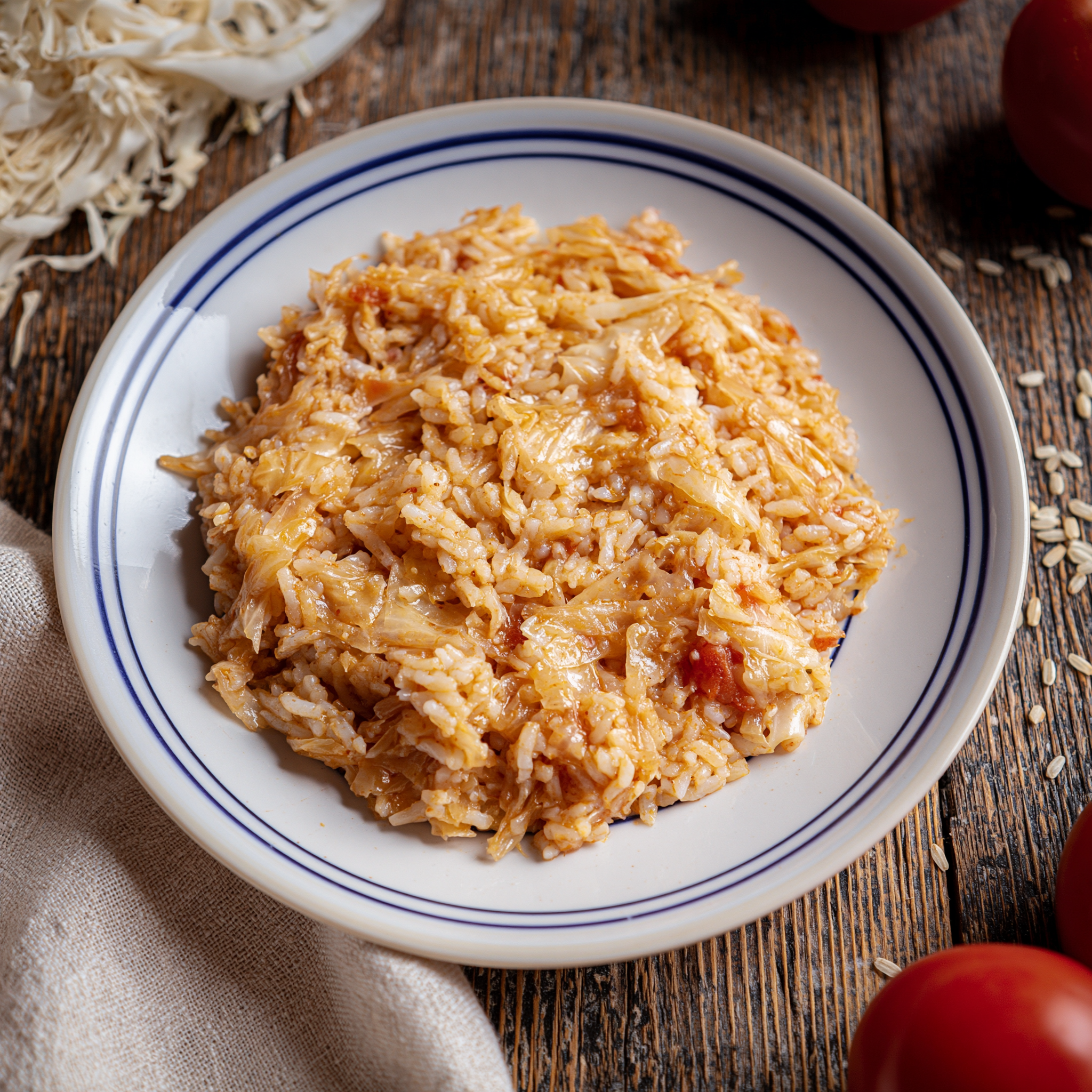
There’s something deeply comforting about a pot quietly simmering on the stove, especially when it’s filled with simple vegetables and rice.

What makes this Greek Cabbage Rice Lahanorizo stand out is the balance. The cabbage softens into silky strands, the rice absorbs all the savory juices, and the lemon at the end lifts everything. After testing this a few times, I found that controlling the moisture and timing the rice addition makes all the difference. It’s simple, yes—but done right, it’s deeply satisfying and surprisingly layered.
Why this recipe works so well
- Silky cabbage texture — Cooking the cabbage covered first allows it to soften gently without browning, giving the dish its signature tender consistency.
- Layered flavor base — Sautéing onion before adding vegetables builds a subtle sweetness that balances the acidity of tomatoes and lemon.
- Perfect rice absorption — Adding rice later prevents it from overcooking while allowing it to soak up the flavorful broth evenly.
- Fresh herb lift — Dill added at the end keeps its aroma bright instead of dulling during cooking.
- Balanced finish — Lemon juice at the end cuts through the richness of olive oil and ties everything together cleanly.
Greek Cabbage Rice Lahanorizo FAQ
What makes Greek Cabbage Rice Lahanorizo different from other rice dishes?
Greek Cabbage Rice Lahanorizo focuses on vegetables and olive oil rather than spices or broth-heavy cooking, creating a lighter, cleaner flavor.
Can I make Greek Cabbage Rice Lahanorizo ahead of time?
Yes, it reheats well; just add a splash of water to loosen the rice and keep it from drying out.
What type of rice works best for Lahanorizo?
Short-grain rice is ideal because it becomes slightly creamy and binds the dish together.
How do I keep the rice from getting mushy?
Add it only after the cabbage has softened and monitor liquid levels closely while it cooks.
Can I skip the dill or lemon?
You can, but both are key to the dish’s brightness; without them, the flavor will feel flatter.
Customization & Pairings
Add protein — Chickpeas or white beans work well because their mild flavor blends into the olive oil and tomato base without overpowering the cabbage.
Boost acidity — A little extra lemon or even a splash of vinegar sharpens the dish and balances the natural sweetness of cooked cabbage.
Increase richness — A drizzle of extra olive oil at the end enhances mouthfeel and carries the dill aroma more effectively.
Add heat — A pinch of chili flakes introduces gentle warmth that contrasts nicely with the soft texture of the rice.
Serve with contrast — Pairing with crusty bread or a tangy yogurt adds texture and coolness, balancing the soft and warm nature of the dish.

Ingredients
Cabbage: Choose a small, dense head with tightly packed leaves; avoid any with brown spots or a sulfur smell, as freshness directly affects sweetness and texture.
Onion: A firm onion with dry skin provides a clean, slightly sweet base; soft spots can lead to bitterness when sautéed.
Celery: Look for crisp stalks with bright color; limp celery lacks the fresh, herbal note that lifts the dish.
Carrots: Firm and smooth carrots bring subtle sweetness; avoid rubbery ones as they won’t soften evenly.
Garlic: Fresh cloves should feel solid and pungent; sprouting garlic can taste harsh.
Short-grain rice: This type absorbs liquid well and creates a cohesive texture; long-grain rice will stay too separate.
Crushed tomatoes: Use a balanced, not overly acidic variety to avoid overpowering the cabbage.
Olive oil: A good-quality olive oil adds depth and body; this is a key flavor, not just a cooking medium.
Dill: Fresh dill should smell vibrant and slightly grassy; wilted dill loses its impact quickly.
Lemon: A heavy, juicy lemon ensures enough acidity to brighten the entire dish.
Greek Cabbage Rice Lahanorizo step by step
- Prepare vegetables — Slice the cabbage into thin strips and chop the onion, carrots, celery, garlic, and dill so everything cooks evenly and releases flavor at the right pace.
- Start the base — Heat olive oil in a pot over medium heat, then sauté the onion until soft and slightly translucent, releasing a gentle sweetness.
- Build flavor — Add carrots, celery, and garlic, stirring briefly until fragrant and the aroma becomes slightly sweet and savory.
- Add tomatoes and cabbage — Stir in crushed tomatoes, cumin, salt, and pepper, then add cabbage and water; cover and let it soften as it steams gently.
- Simmer gently — Cook for about 15 minutes until the cabbage turns tender and glossy, stirring occasionally to prevent sticking.
- Add rice — Stir in the rice and more water, ensuring it is evenly distributed so it cooks consistently without clumping.
- Cook until tender — Let the mixture simmer for about 20 minutes, stirring occasionally and adding water if needed to maintain a slightly loose consistency.
- Finish fresh — Add dill and lemon juice, cook briefly, then taste and adjust seasoning before serving warm.

You might also like…

Greek Cabbage Rice Lahanorizo
Ingredients
- 1 small cabbage
- 1 onion
- 3 –4 celery stalks
- 1 –2 carrots
- 2 –3 garlic cloves
- 1/2 cup short-grain rice
- 2 tablespoons fresh dill
- 1/2 cup crushed tomatoes
- 4 –5 tablespoons olive oil
- 1 lemon
- 1/2 teaspoon cumin
- Salt and pepper
Instructions
- Slice the cabbage and chop all vegetables into small, even pieces to ensure consistent cooking.
- Heat olive oil in a pot and sauté the onion until soft and lightly translucent.
- Add carrots, celery, and garlic, stirring briefly until fragrant.
- Stir in crushed tomatoes, cumin, salt, and pepper, then add cabbage and water, cover, and cook until softened.
- Add the rice and additional water, stirring to distribute evenly.
- Simmer gently, stirring occasionally, until the rice is tender and has absorbed most of the liquid.
- Finish with fresh dill and lemon juice, cook briefly, then adjust seasoning and serve warm.