
There is a specific kind of quiet that takes over the kitchen when you’re slowly browning meat and aromatics for a ragu. Usually, we expect that deep, acidic punch of tomato to take the lead, but a white bolognese—or ragu bianco—relies on something entirely different. I remember the first time I skipped the red sauce; I was skeptical that a pale sauce could carry the same weight as its famous cousin.

However, as the white wine hit the hot pan and deglazed the bits of pancetta and beef, the fragrance was brighter, more herbal, and arguably more complex than the standard red version. It’s the kind of meal that feels sophisticated without trying too hard, perfect for when you want comfort but want to skip the heavy acidity of canned tomatoes.
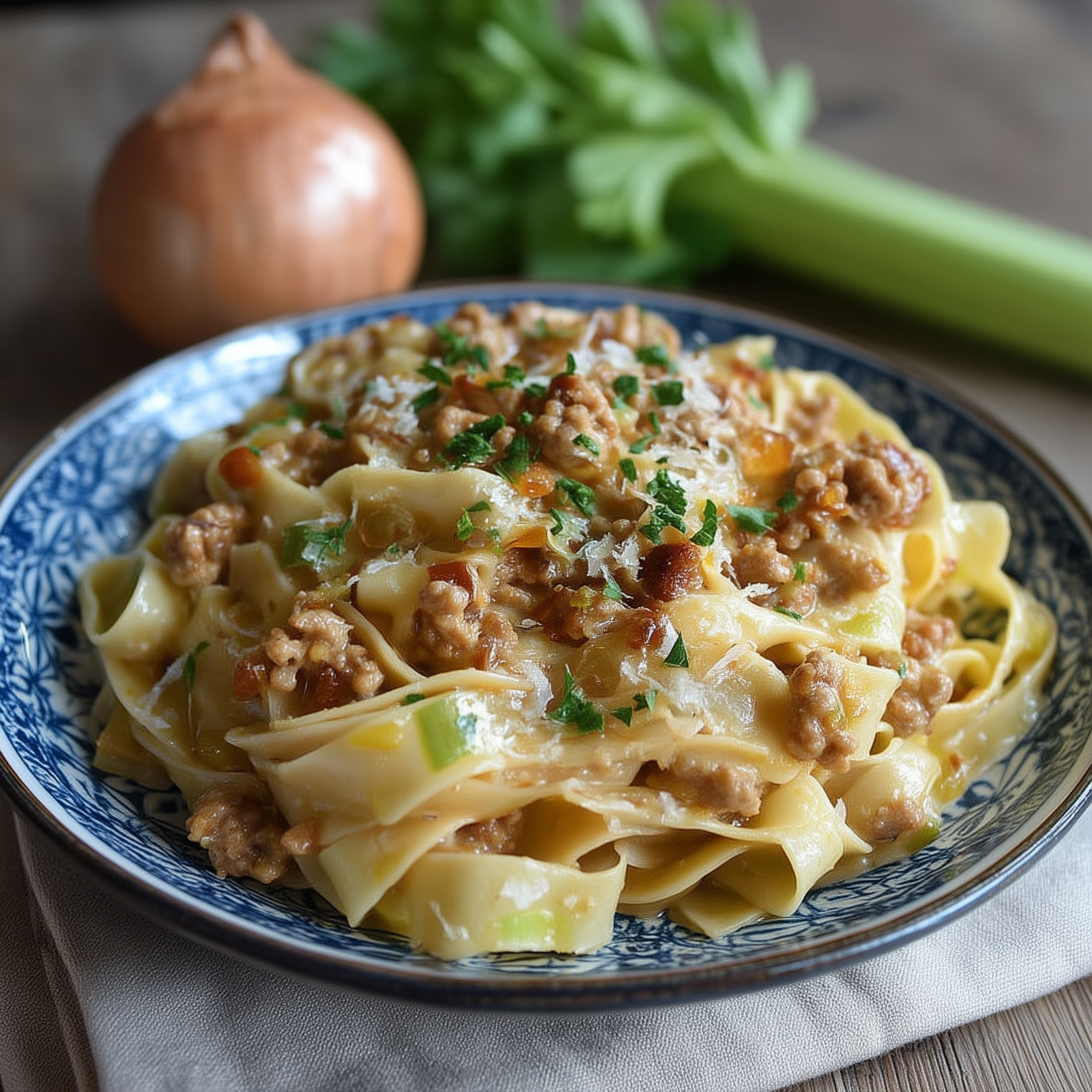
What makes this version truly sing is the layering of fats and liquids to create a creamy emulsion without needing a tub of heavy cream. Using both ground beef and pork provides a better fat-to-lean ratio, while the addition of whole milk and a Parmesan rind creates a velvety coating for the pasta. I’ve found that tieing the rosemary sprigs together is a small but vital step; it lets those piney oils infuse the sauce thoroughly without leaving you picking needles out of your teeth later. You’ll notice the sauce looks a bit loose until the very end, but once that starchy pasta water hits the pan and meets the grated Parmigiano Reggiano, everything tightens up into a glossy, restaurant-quality finish that clings beautifully to wide ribbons of tagliatelle.
Why White Bolognese beats the standard classic?
Dual-meat foundation: Using equal parts beef and pork creates a nuanced flavor profile that all-beef recipes lack. The pork adds a necessary sweetness and softer texture, while the beef provides the savory structure, ensuring the sauce feels substantial even without a tomato base.
The Parmesan rind hack: Never toss your old cheese rinds. Simmering a large rind directly in the stock releases natural salts and proteins that act as a thickener. It adds a background note of aged umami that ties the meat and milk together seamlessly.
Controlled herb infusion: By using whole rosemary sprigs tied with twine or tucked into a tea bag, you capture the woodsy aroma without the gritty texture of chopped dried herbs. It keeps the sauce looking clean and elegant while providing a punchy, fresh contrast to the rich fats.
White Bolognese FAQ
Can I swap the white wine in White Bolognese for something else?
You can use a splash of lemon juice mixed with extra beef stock, though you’ll miss the depth that a dry Pinot Grigio provides. Pro tip: If skipping alcohol, add a teaspoon of white wine vinegar at the very end to mimic that bright acidic lift.
How do I store leftovers from White Bolognese without the pasta getting mushy?
It is best to store the sauce and pasta separately in airtight containers for up to three days. Pro tip: When reheating the sauce, add a tablespoon of water or milk to loosen it up before tossing it with freshly boiled noodles.
Is it okay to use ground turkey instead of pork for White Bolognese?
You can, but you’ll lose the essential fats that make a ragu bianco successful. Pro tip: If using leaner meats like turkey, double the amount of pancetta to ensure the sauce doesn’t end up dry or crumbly.
Customization & Pairings
Earthy depth — Add finely chopped wild mushrooms, like porcini or cremini, to the mirepoix. The mushrooms provide a meaty texture and an earthy umami that complements the white wine and rosemary without overwhelming the delicate pork.
Bright citrus finish — Stir in a teaspoon of fresh lemon zest and a squeeze of juice just before serving. The acid cuts through the richness of the pancetta and whole milk, highlighting the herbal notes of the rosemary and making the dish feel lighter.
Spicy contrast — Add a pinch of red pepper flakes to the olive oil while sautéing the onions. A gentle heat balances the creamy, fatty elements of the sauce, providing a lingering warmth that keeps the palate engaged.
Textural crunch — Top the finished pasta with toasted sourdough breadcrumbs tossed in garlic butter. The crunch offers a necessary break from the soft, silky ribbons of pappardelle and the tender meat sauce.
Wine pairing logic — Serve this with the same Pinot Grigio used in the sauce or a light-bodied Nebbiolo. A crisp white with high acidity cleanses the tongue of the fats, while a light red highlights the savory beef notes.

Ingredient notes & testing
Pancetta: This is your salt and fat base. Look for small, even cubes; as it renders, the fat becomes the flavorful medium for sautéing your vegetables, providing a cured, smoky undertone.
Mirepoix (Onion, Carrot, Celery): These should be diced very finely (brunoise). They aren’t meant to be chunks; they should almost melt into the meat, providing a foundation of sweetness and aromatics.
Dry White Wine: Avoid “cooking wines” which are often over-salted. Use a drinkable Pinot Grigio or Sauvignon Blanc; the acidity is crucial for breaking down the meat proteins and balancing the fat.
Whole Milk: Do not substitute with skim or plant-based milks. The lactic acid in whole milk tenderizes the beef and pork, while the fat content creates the “white” silky texture characteristic of this ragu.
Parmesan Rind: This is a flavor bomb. It should look clean and be free of wax. As it simmers, it releases glutamates that provide a deep, savory “third dimension” to the sauce.
Nutmeg: Use just a pinch. It shouldn’t taste like spice cake; rather, nutmeg enhances the dairy and meat flavors, adding a subtle warmth that is traditional in northern Italian meat sauces.
Pasta Water: Treat this like liquid gold. It contains the starch needed to emulsify the oils and liquids into a cohesive sauce that actually sticks to your noodles.
White Bolognese step by step
- Sauté the aromatics — Heat the olive oil in a large pot over medium heat and add the finely diced onion, carrot, and celery. Cook until softened and translucent, about 8 minutes, ensuring they don’t pick up too much brown color.
- Render the pancetta — Stir in the diced pancetta and cook for another 5 minutes. You want the fat to render out until the edges of the pork start to look golden and slightly crisp.
- Brown the meats — Increase the heat slightly and add the ground beef and pork. Break the meat apart with a wooden spoon and cook until it is no longer pink and has developed a nice sizzle, but avoid hard-searing it into dry crumbles.
- Deglaze with wine — Pour in the white wine, scraping the bottom of the pot to release any flavorful browned bits. Let it simmer until the liquid has reduced by about half and the sharp scent of alcohol has vanished.
- Simmer with liquids — Add the beef stock, the Parmesan rind, the rosemary sprigs, and half of the milk. Season with a bit of salt and pepper, then turn the heat to low and let it gently bubble for at least 45 minutes to develop depth.
- Finish the sauce — Stir in the remaining milk and the ground nutmeg. Remove the rosemary sprigs and the Parmesan rind (which should be soft and stretchy now).
- Emulsify with pasta — While the sauce finishes, boil your pasta in salted water until just shy of al dente. Reserve 1.5 cups of the starchy water before draining.
- The final toss — Add the pasta, reserved water, and grated Parmigiano Reggiano to the meat sauce. Toss vigorously over medium heat for 2 minutes until the sauce turns glossy and coats every strand of pasta perfectly.

You might also like…

White Bolognese
Ingredients
- 2 Tablespoons olive oil
- 1 medium/large red or yellow onion finely diced
- 1 large carrot finely diced
- 1 large celery rib finely diced
- 5 garlic cloves minced
- 4 oz diced pancetta
- 1 lb ground beef
- 1 lb ground pork
- 3/4 cup dry white wine Pinot Grigio
- 2 cups beef stock or chicken stock
- 1 large Parmesan rind
- 3/4 cup whole milk divided
- 2 rosemary sprigs tied with kitchen twine
- 1 lb dried tagliatelle or pappardelle
- 1 1/2 cups pasta water reserved from boiling
- 1/8 teaspoon ground nutmeg
- 1/2 cup freshly grated Parmigiano Reggiano
- salt & black pepper to taste
Instructions
- Sauté the aromatics — Heat the olive oil in a large pot over medium heat and add the finely diced onion, carrot, and celery. Cook until softened and translucent, about 8 minutes, ensuring they don’t pick up too much brown color.
- Render the pancetta — Stir in the diced pancetta and cook for another 5 minutes. You want the fat to render out until the edges of the pork start to look golden and slightly crisp.
- Brown the meats — Increase the heat slightly and add the ground beef and pork. Break the meat apart with a wooden spoon and cook until it is no longer pink and has developed a nice sizzle, but avoid hard-searing it into dry crumbles.
- Deglaze with wine — Pour in the white wine, scraping the bottom of the pot to release any flavorful browned bits. Let it simmer until the liquid has reduced by about half and the sharp scent of alcohol has vanished.
- Simmer with liquids — Add the beef stock, the Parmesan rind, the rosemary sprigs, and half of the milk. Season with a bit of salt and pepper, then turn the heat to low and let it gently bubble for at least 45 minutes to develop depth.
- Finish the sauce — Stir in the remaining milk and the ground nutmeg. Remove the rosemary sprigs and the Parmesan rind (which should be soft and stretchy now).
- Emulsify with pasta — While the sauce finishes, boil your pasta in salted water until just shy of al dente. Reserve 1.5 cups of the starchy water before draining.
- The final toss — Add the pasta, reserved water, and grated Parmigiano Reggiano to the meat sauce. Toss vigorously over medium heat for 2 minutes until the sauce turns glossy and coats every strand of pasta perfectly.



One response to “White Bolognese”
Lovely! A great italian classic.